Shovakar · Shobhakar · Śobhākara

SHOVAKAR’SFrom ancient roots to modern global footprints.

A family name that began as a royal honour in Bengal — carried by Sanskrit poets and logicians, engineers and educators, freedom-movement households and, today, musicians, filmmakers and media entrepreneurs across three continents.

Origin
Guptipara, Hooghly — West Bengal
Ancestral home
Sobhakar Bari, Haripur, Nadia
Tradition
Kali Puja, 300+ years
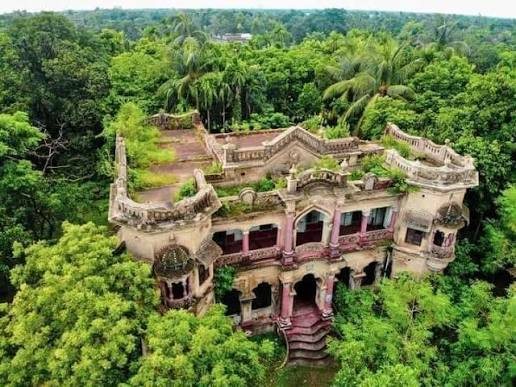
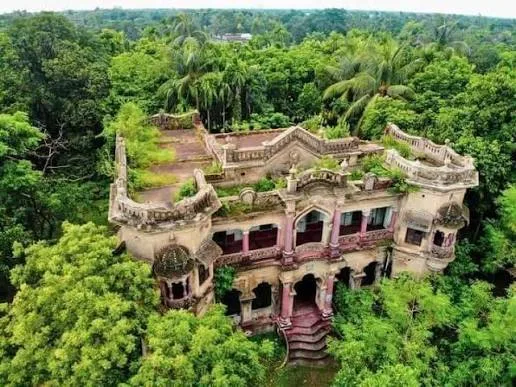
Aerial view of Sobhakar Bari, the Shovakar family house at Haripur, surrounded by trees
Sobhakar Bari, Haripur
01

The name today.

Across contemporary India, Europe and North America, people bearing the rare surname Shovakar — frequently rendered as Shobhakar — have built distinctive footprints in music, media, film and global enterprise.

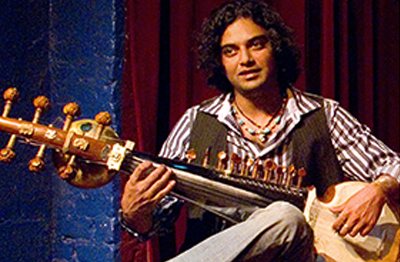
Anupam Shobhakar performing on the sarod
Mumbai & New York

Anupam Shobhakar

An internationally acclaimed sarodist, guitarist and composer trained in the Maihar tradition. Reflecting a multi-generational family devotion to Goddess Kali, he designed a custom double-neck fretted and fretless guitar christened Kali Maa.

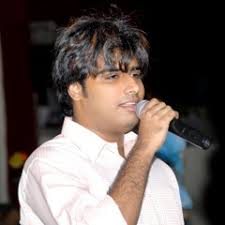
Portrait of Dr Shahaji Shovakar
Indore & St Albans, UK

Dr Shahaji Shovakar

Media entrepreneur, storyteller, documentary filmmaker and founder of A Bodhi Tree Media — bridging cross-border creative communication and emerging technology. On air as “Pasha”.

Portfolio ↗
Portrait of Avii (Aviishek) Shovakar
Berlin & Potsdam

Avii (Aviishek) Shovakar

A globally active cinematographer, colorist, media designer and filmmaker with decades of international production experience.

Diverse careers, one striking resonance with the family’s historical identity: a deep-seated engagement with art, scholarship, literature and public expression.
02

How an honorific became a family name.

In premodern Bengal, learned Brahmin families often held ancestral surnames alongside earned scholastic titles such as Vidyalankar, Tarkalankar and Tarkavagish. Over generations the honorific Shobhakar — also found as the compound Chattashobhakar — became hereditary. Two traditions preserve its beginnings.

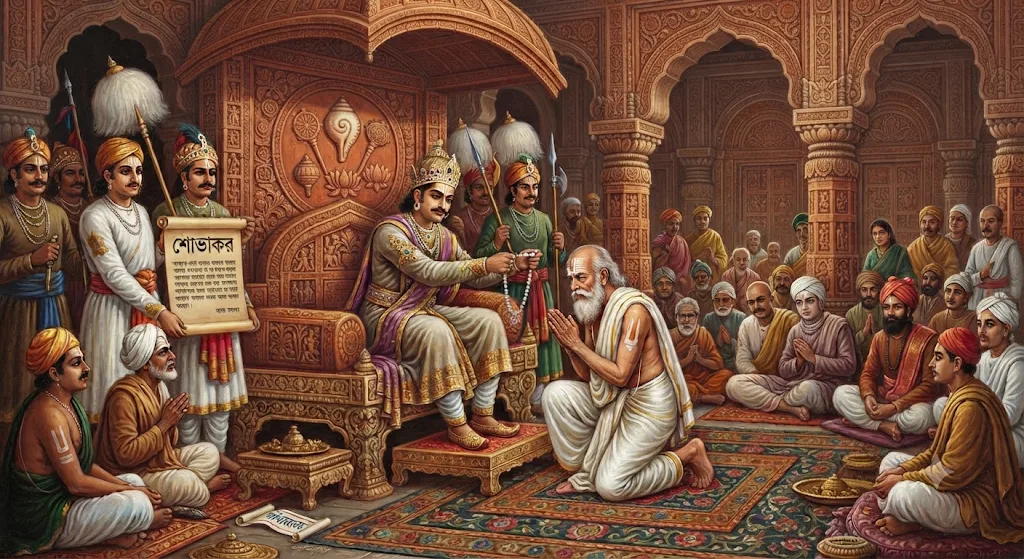
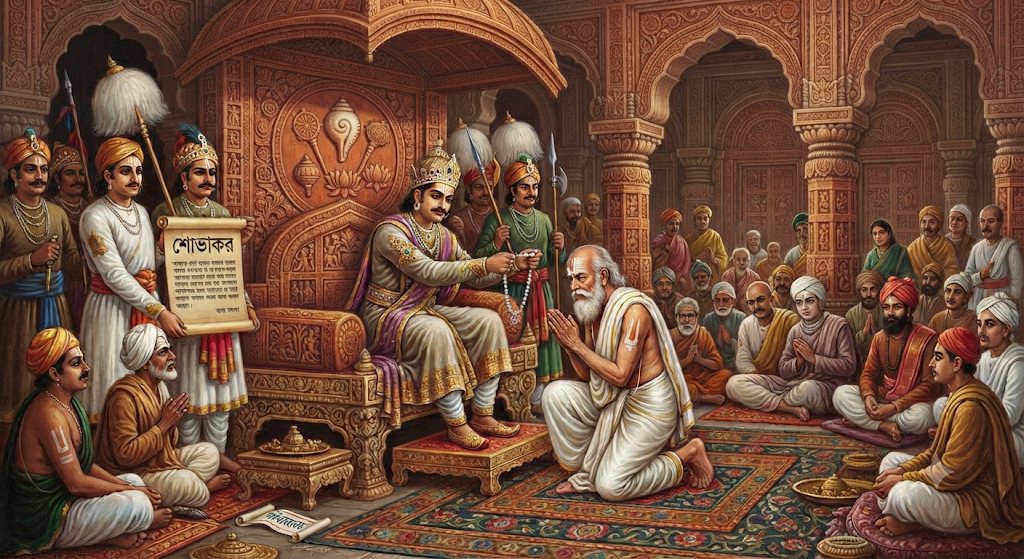
Illustration of a Sanskrit scholar receiving a title at a royal court in Bengal
Artistic rendering
The royal court tradition · family oral history

Lustre to the assembly

According to family memory, the ancestral kul-purohit (royal priest) at the court of Raja Ballal Sen was Kashiswar Vidyalankar, born Chattopadhyay. Because his erudition and bearing added lustre — shobhabardhan — to the royal assembly, the monarch conferred upon him the title Shovakar.

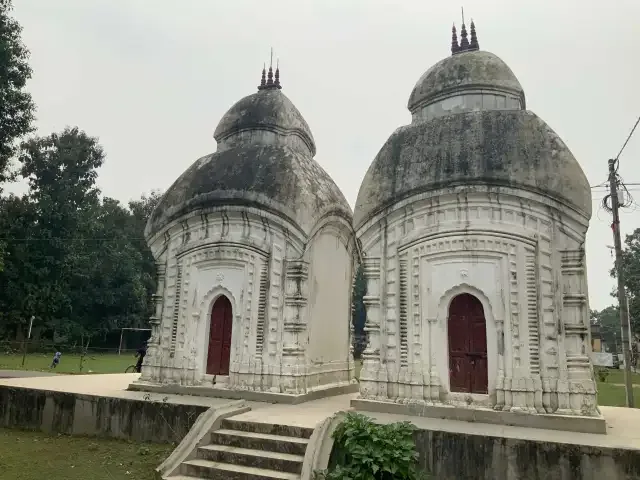
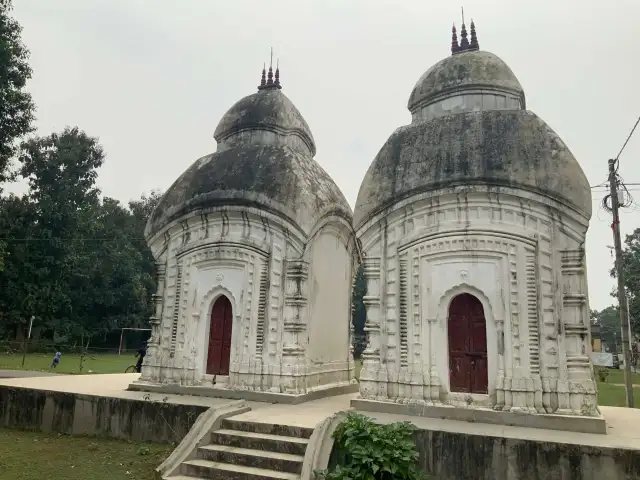
Twin temples at Guptipara, Hooghly
Guptipara (historically Guptapalli), Hooghly
The scholarly nucleus · encyclopaedic record

Shobhakar of Guptipara

Historical encyclopaedias (Banglapedia) trace the lineage to an ancestral scholar named Shobhakar of Guptipara in present-day Hooghly district — a town renowned for Sanskrit academies, Nyaya (logic) and Smriti (law) scholarship, and Shakta devotional literature.

03

The golden age of scholarship.

17th–18th century. The strongest independently documented chapter of the family — preserved in the British Library’s Endangered Archives Programme, the Bibliothèque nationale de France and Banglapedia — centres on a remarkable dynasty of Sanskrit intellectuals in Guptipara.

  1. 1642

    Mathuresh Vidyalankar

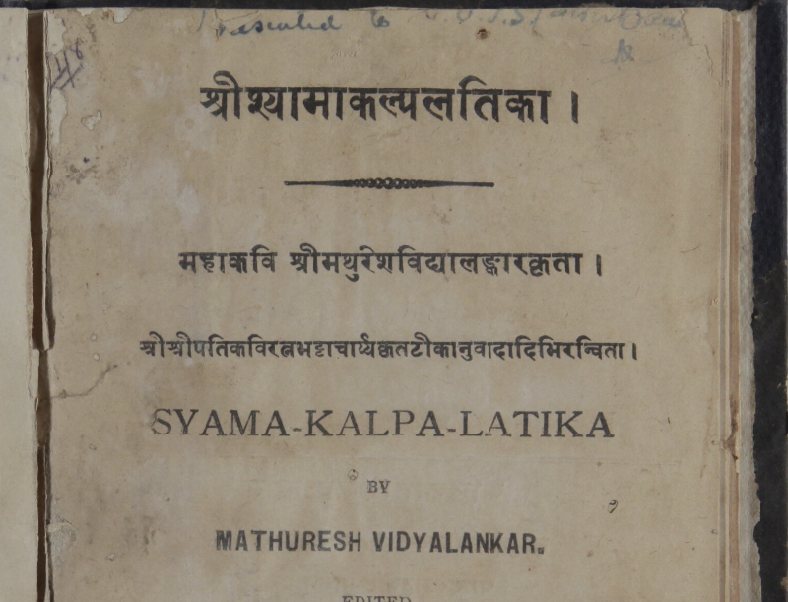
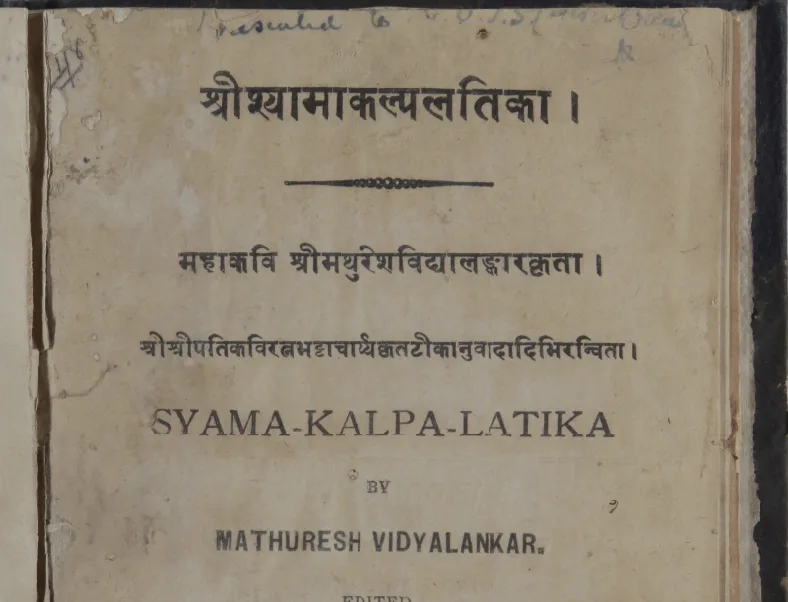
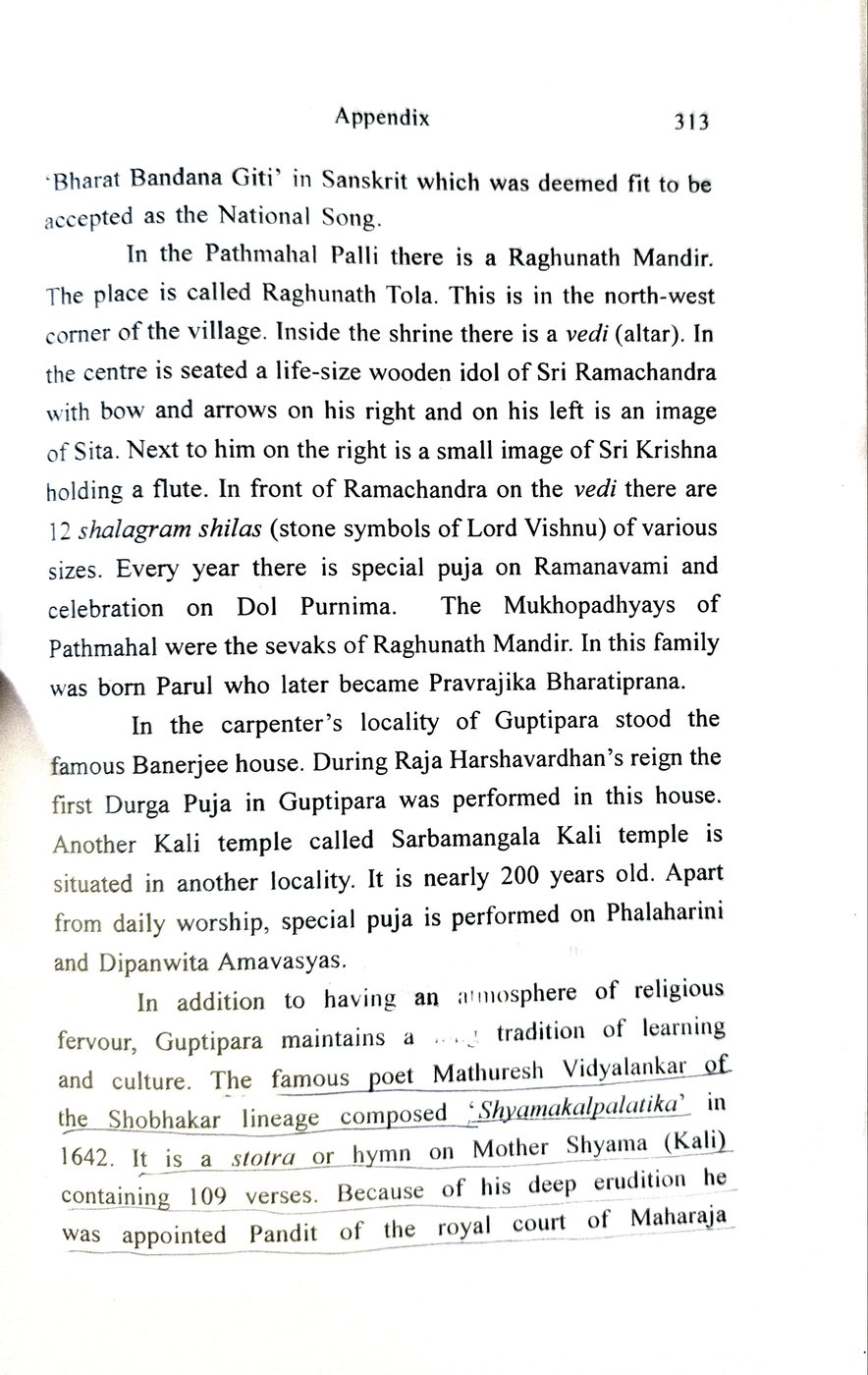
    A celebrated poet of the Shobhakar lineage who composed Shyamakalpalatika — a stotra of 109 verses to Mother Shyama (Kali). Because of his deep erudition he was appointed pandit of the royal court of Maharaja Krishnachandra of Nadia.

    Title page of Syama-Kalpa-Latika by Mathuresh Vidyalankar
    Syama-Kalpa-Latika — title page
  2. 17th c.

    Bishnusidhanta Bhattacharya & Ramdev Tarkavagish

    A renowned Sanskrit poet and his son, a master logician (Tarkavagish), who anchored the family’s scholarly standing in Guptipara.

  3. c. 1700–1788

    Baneshwar Vidyalankar / Tarkalankar

    The lineage’s most celebrated historical figure. A poet, logician and dramatist, Baneshwar circulated through the highest intellectual courts of 18th-century Bengal — Maharaja Krishnachandra of Nadia, Nawab Alivardi Khan in Murshidabad, Raja Chitra Sen of Burdwan, and Raja Nabakrishna Deb of Shobhabazar, Calcutta.

    Literary legacy. His masterpiece Chitracampu — a vivid mixed prose-and-verse chronicle of the Maratha raids into Bengal and Alivardi Khan’s resistance — survives in archival manuscripts at Guptipara’s Sisir Bani Mandir Pathagar.

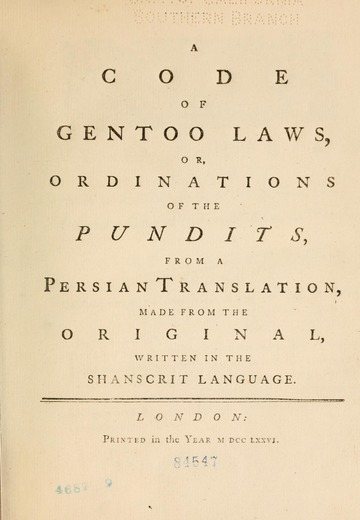
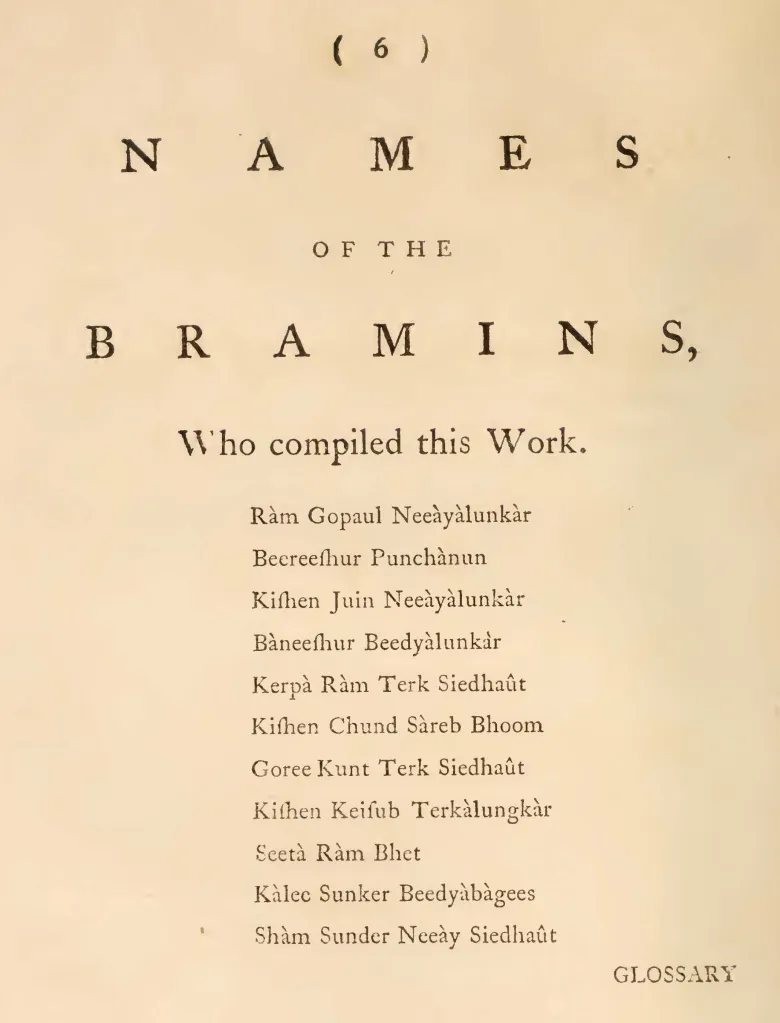
    Legal milestone. Under Warren Hastings’s administration, Baneshwar was one of eleven senior pandits commissioned to compile the Vivādārṇavasetu — translated into English by Nathaniel Brassey Halhed in 1776 as A Code of Gentoo Laws, one of the foundational legal texts used in early British Indian courts.
    Title page of A Code of Gentoo Laws, London, 1776
    A Code of Gentoo Laws, London, 1776
    Page listing the names of the pandits who compiled the work, including Baneshwar
    “Names of the Bramins who compiled this Work”
  4. 18th c.

    Ramakanta Tarkalankar

    Baneshwar’s brother, remembered in local biographical tradition as a dedicated Tantric sadhak — reflecting the lineage’s deep Shakta, Goddess-centred spiritual heritage alongside classical court scholarship.

04

Crossing the Ganges: the Haripur chapter.

Erosion, resettlement, and a new intellectual centre. According to family chronicles, the shifting course of the Ganges eventually eroded and submerged the ancestral Shovakar residence in Guptipara.

Family members crossed to the eastern bank, establishing a new home at Haripur Senpara, near Shantipur in Nadia district — rebuilt by ancestors remembered as Sakura and Brohmoshashan on land gifted beside the zamindari mahal of the Ghatak family.

In the 19th and early 20th centuries, the Haripur branch moved from classical Sanskrit scholarship into modern education, engineering, literature and India’s freedom struggle.

The Shovakar house at Haripur seen from above
The Haripur house today
Education

Khetranath Shovakar

Principal of the historic Oriental Seminary in Calcutta — the institution where a young Rabindranath Tagore briefly studied in his childhood.

Engineering & letters

Rai Bahadur Bhudeb Chandra Shovakar

Civil engineer, architect and playwright. A graduate of Bengal Engineering College, Shibpur, he travelled by sea to Glasgow and Edinburgh for advanced engineering training. Returning to India, he was conferred the title of Rai Bahadur and played an instrumental role in major infrastructure, including the Nabadwip–Krishnanagar road and Lucknow Railway Station. He also wrote prose (Shaptaparni, Shibchaturdosi) and the widely staged play Raja Harishchandra.

Civic life & freedom

Madhab Shovakar

Mobilised Haripur residents to agitate for local road infrastructure. The Shovakar residence became a hub of nationalist resolve — contributing to the Swadeshi Movement and serving as an active centre of resistance during the 1942 Quit India Movement.

“Bhudeb Jatin dui bondhu
Haripur bari
Dujone engineer
Dujone kobi.”

Rabindranath Tagore, on Bhudeb Chandra Shovakar and his neighbour, the poet Jatindranath Sengupta — “Bhudeb and Jatin, two friends from Haripur. Both engineers, both poets.”
05 — Sobhakar Bari · Haripur

Three hundred years of Kali Puja.

Family accounts link the Haripur household to the ancestral Raj title “Sobhakar” and to a Kali Puja tradition stretching back at least 300 years — the same devotion to the Goddess that runs from Mathuresh Vidyalankar’s 1642 hymn to the guitar Anupam Shobhakar named Kali Maa.

Sobhakar Bari on Google ↗
Title page of Shyamakalpalatika, a 109-verse hymn to Goddess Kali
Shyamakalpalatika — a hymn to Kali, 1642
06

In print: A Blessed Life.

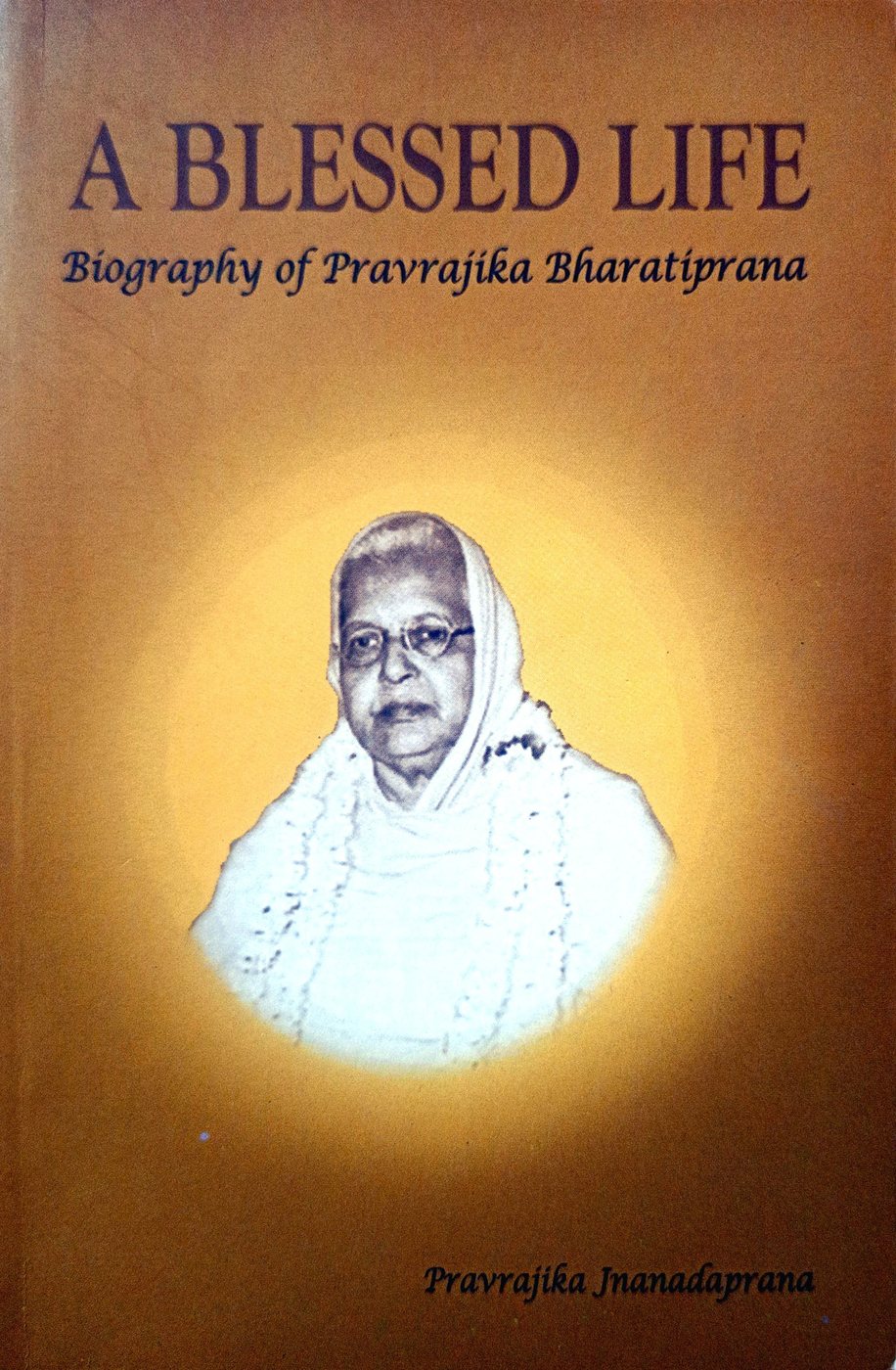
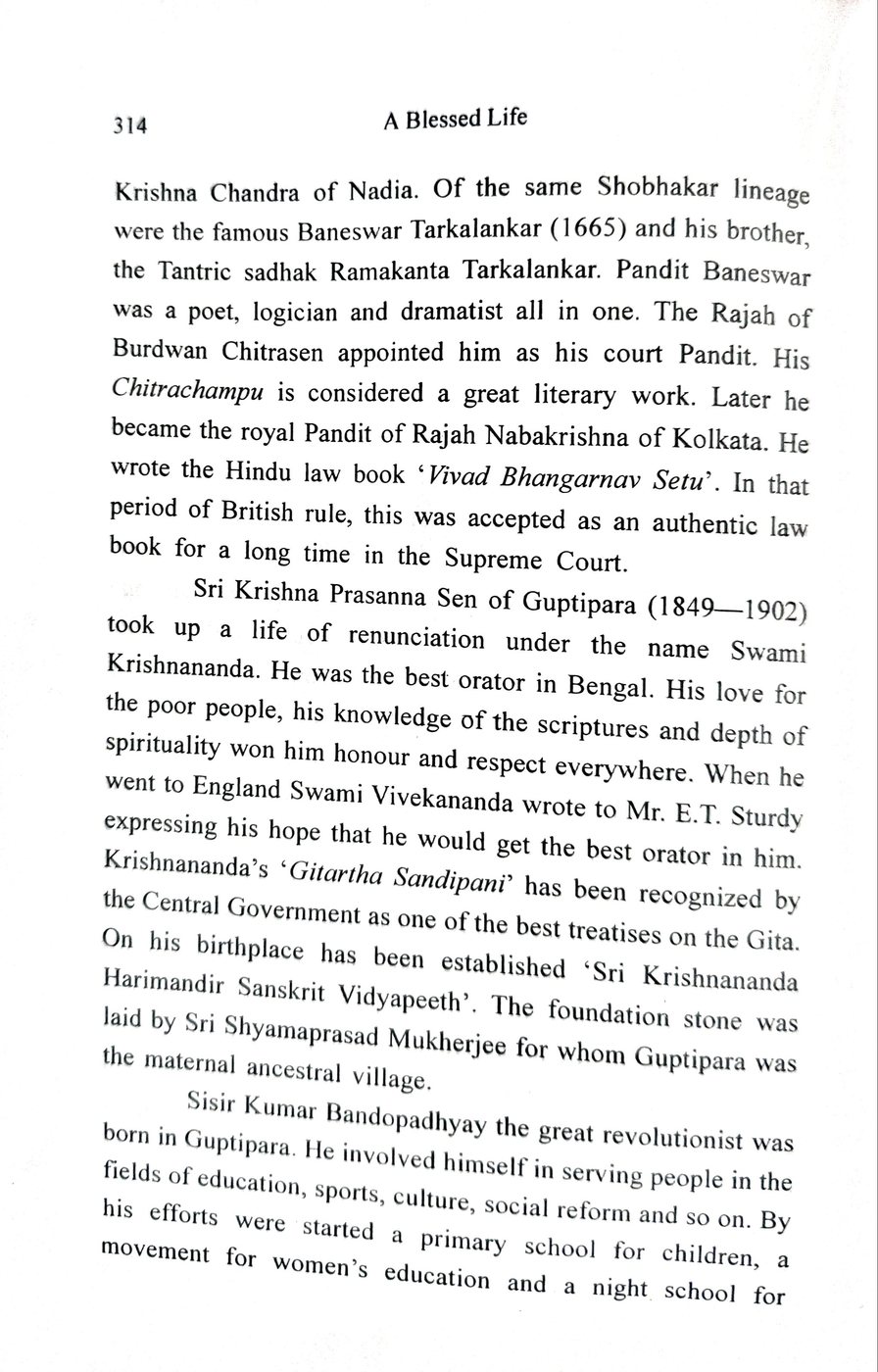
The appendix to A Blessed Life — Biography of Pravrajika Bharatiprana by Pravrajika Jnanadaprana describes Guptipara’s tradition of learning, naming “the famous poet Mathuresh Vidyalankar of the Shobhakar lineage” and, “of the same Shobhakar lineage”, Baneswar Tarkalankar and his brother, the Tantric sadhak Ramakanta Tarkalankar.

Cover of A Blessed Life, Biography of Pravrajika Bharatiprana
Cover
Page 313 of A Blessed Life, mentioning Mathuresh Vidyalankar of the Shobhakar lineage
Appendix, p. 313
Page 314 of A Blessed Life, mentioning Baneswar Tarkalankar and Ramakanta Tarkalankar
Appendix, p. 314

Sources & further reading

Family-tradition accounts are presented as remembered by the family. The royal-court illustration is an artistic rendering.